
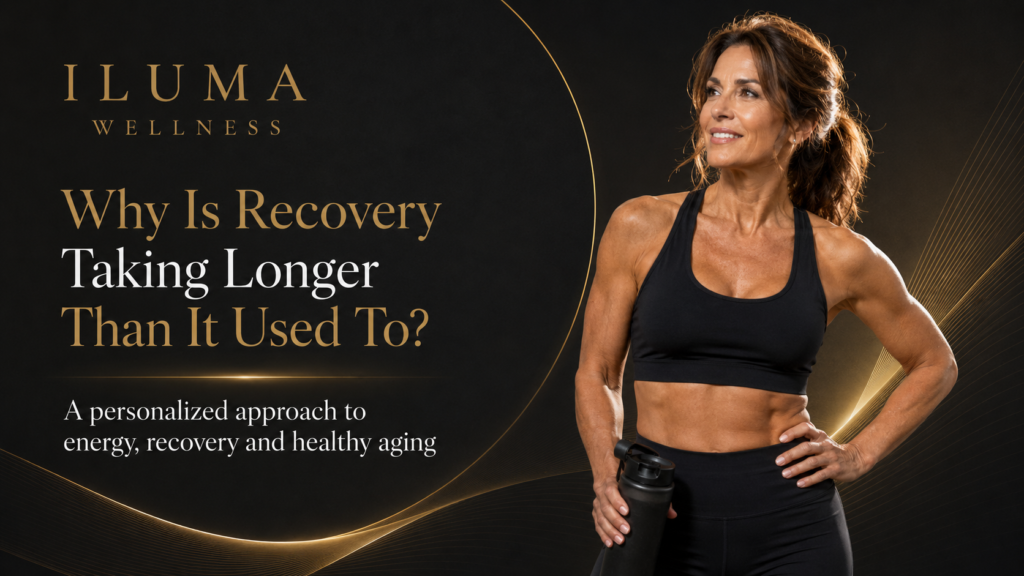
You used to be able to do a hardcore work out, get a good night’s sleep, and wake up bright and bushy tailed the next day. Now the delayed onset muscle soreness (DOMS) sticks around for days. Your energy takes longer to come back. A hard week seems to cross right on over into the next one, and even when you are doing “all the right things,” your body may not seem to bounce back the way it once did.
That doesn’t necessarily mean something’s wrong. Recovery naturally changes over time, and it is influenced by far more than just age.
SLEEP
Sleep is one of the biggest pieces of the puzzle. Deep, consistent sleep gives the body time to carry out many of the processes involved in physical and mental restoration. Stress can interfere with that process, as can alcohol, inconsistent schedules, travel, pain, hormonal changes, and simply trying to do too much without enough downtime.
HYDRATION
Hydration and nutrition matter as well. If you are not taking in enough fluids, protein, calories, vitamins, or minerals to support your activity level, recovery can begin to feel noticeably slower. This can be especially relevant in Southwest Florida, where heat and humidity can increase fluid loss before you even realize you are dehydrated.
REVAMP THE WAY YOU TRAIN
Your training regimen may also need to evolve. More exercise is not always better. Repeated intense workouts without enough rest can leave the body constantly trying to catch up. Strength training, mobility work, lower-intensity movement, adequate rest days, and a realistic training schedule can often support better long-term performance than simply pushing harder.
HEALTH
Then there are health factors that deserve attention. Fatigue and slow recovery can sometimes be associated with hormonal changes, nutritional deficiencies, metabolic issues, chronic stress, inadequate sleep, medication effects, or other medical conditions. If your recovery has changed significantly or you consistently feel depleted, it may be worth discussing those changes with a qualified healthcare professional instead of assuming they are simply part of getting older.
At Iluma Wellness in Fort Myers, our approach to recovery begins with looking at the individual rather than automatically reaching for a single solution. We offer services including RN-administered IV therapy and vitamin injections, wellness and fitness coaching, and consultation-based peptide and GLP-1 programs that are selected according to a client’s goals and health history.
PEPTIDES
Peptide therapy is one option that may be discussed as part of a personalized wellness plan. Because different peptides are used for different purposes and individual responses can vary, treatment should be based on a person’s health history, goals, current medications, and overall wellness needs. Rather than viewing peptides as a quick fix, the focus should be on whether they fit appropriately within a broader strategy that may also include nutrition, movement, sleep, hydration, and other supportive therapies.
INJECTIBALES
Iluma Wellness also offers injectable vitamin and nutrient therapies as part of its personalized wellness approach. Options may include nutrients such as B vitamins, vitamin D3, magnesium, glutathione, amino acids, NAD+, and other targeted formulations selected according to individual needs and goals. Depending on the person, these therapies may be considered alongside nutrition, movement, hydration, sleep, and other supportive strategies rather than as stand-alone solutions. Each option is reviewed through an individual consultation and health assessment, with therapies provided under medical supervision.
WE CUSTOMIZE
That is why individualized consultation matters. A wellness plan may include changes to training, hydration, sleep, nutrition, or recovery habits, and in appropriate situations, our clinicians may discuss additional options based on health history, goals, risks, and current evidence.
Recovery is not just about how quickly your muscles stop hurting. It is a reflection of how well your body is handling the demands being placed on it. If you are noticing that it takes longer to feel like yourself again, consider it useful information rather than something to ignore.
Your body may not be asking you to stop. It may simply be asking for a smarter recovery strategy. We can help. Don’t burn yourself out – Let us create a plan that works for you! Visit www.Ilumawellness.com or call 239-